

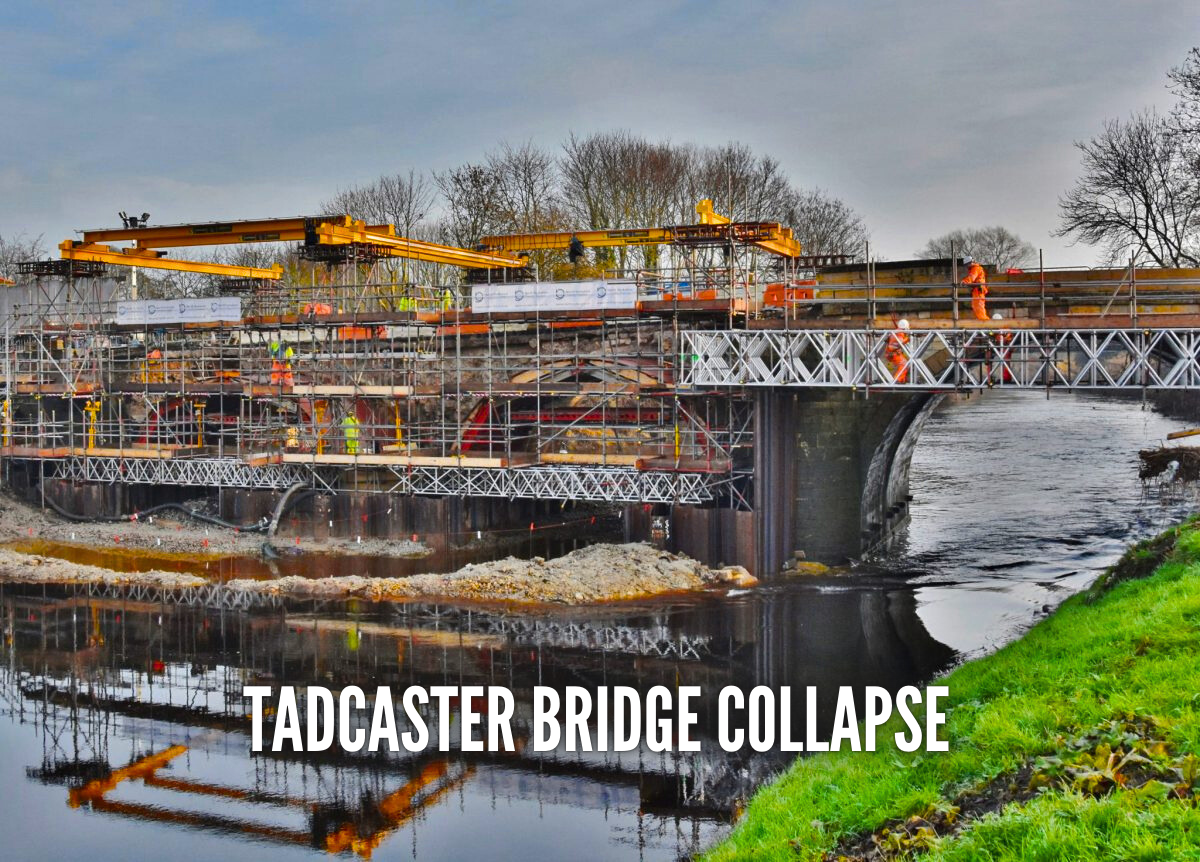
On the evening of 29 December 2015, a centuries-old landmark faced a disaster few anticipated. The Tadcaster Bridge collapse occurred when part of the historic stone structure in Tadcaster, North Yorkshire, England, fell into the raging River Wharfe after relentless rainfall caused severe flooding. This catastrophic event disrupted the lives of hundreds of residents, challenged engineering assumptions, and became a vivid reminder of how extreme weather can threaten even the most established infrastructure.
The Tadcaster Bridge collapse didn’t just destroy a crossing — it split a town in two, damaged properties, and left local authorities scrambling to manage both safety and recovery. Utility lines running across the bridge were exposed, creating immediate hazards, while emergency responders worked tirelessly to evacuate residents from vulnerable homes.
The Historical Significance of Tadcaster Bridge
The bridge, often called Wharfe Bridge, has stood since approximately 1700, though earlier structures existed in Tadcaster as far back as the 1200s. For centuries, it served as a vital link across the River Wharfe, connecting the east and west sides of the town. Built from Magnesian Limestone, it carried the A659 road and supported generations of families, businesses, and daily travelers.
Before its collapse, the bridge had been widened in the 19th century and gained Grade II listed status in 1985, underscoring both its architectural and historical value. For many residents, the bridge was more than a crossing — it was a symbol of Tadcaster’s identity and resilience. The Tadcaster Bridge collapse struck at this sense of heritage, leaving the town physically and emotionally divided.
The Floods That Led to Disaster
The winter of 2015 was unusually wet in northern England. Storm Eva brought persistent rainfall, causing rivers to swell to dangerous levels. By 26 December, local authorities had already closed Tadcaster Bridge to both vehicles and pedestrians due to rising floodwaters that threatened its foundations.
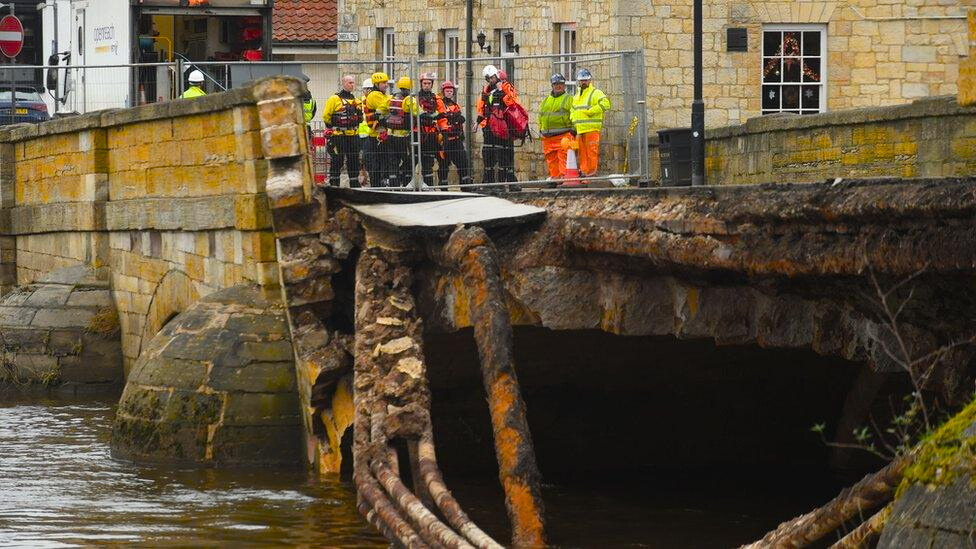
Despite these precautions, the bridge could not withstand the forces of nature. On 29 December, the Tadcaster Bridge collapse occurred as the upstream section gave way, sending stone arches, asphalt, and utility lines into the river. Witnesses described the scene as both shocking and heartbreaking, with clouds of dust rising as sections of the bridge crumbled.
| Field | Details |
|---|---|
| Event Name | Tadcaster Bridge collapse |
| Location | Tadcaster, North Yorkshire, England |
| Date of Collapse | 29 December 2015 |
| Cause | Severe flooding from Storm Eva undermining the bridge foundations |
| Bridge Type | Stone arch bridge, Grade II listed |
| Original Construction | Around 1700 |
| Number of Arches | 7 |
| Materials | Magnesian Limestone |
| Damage | Partial collapse of upstream section, utility lines exposed |
| Evacuations | Hundreds of nearby residents evacuated |
| Reconstruction Start | Early 2016 |
| Reopening Date | 3 February 2017 |
| Key Lessons | Importance of maintaining historic structures and flood preparedness |
| Impact on Town | Divided Tadcaster temporarily, disrupted daily life, businesses, and schools |
The Collapse and Immediate Response
The Tadcaster Bridge collapse created immediate danger due to exposed gas and utility lines. Emergency services responded quickly, establishing safety cordons and evacuating nearby residents. Soldiers, fire crews, police, and ambulance teams worked together to secure the area.
The Environment Agency issued a severe flood warning, emphasizing the significant risk to life posed by both the flooding and the unstable bridge. For many Tadcaster residents, this was a time of uncertainty, fear, and disruption to their daily routines.
A Town Cut in Two
The Tadcaster Bridge collapse physically divided the town. With the main crossing destroyed, residents had to take lengthy detours, including routes via the A64 bypass. Families struggled to maintain normal routines, businesses faced reduced footfall, and children attending schools on the opposite side of the river had to adjust to longer journeys.
Stories like that of Chrissie and Barbara Wilson, a mother-daughter pair separated by the bridge collapse, highlighted the emotional toll. Their reunion on a temporary footbridge months later became a poignant symbol of the community slowly reconnecting.
Temporary Footbridge and Resilience
Within weeks, a temporary footbridge was constructed downstream, allowing pedestrians to cross the river safely. On 12 February 2016, residents celebrated the new link, restoring a sense of connection and normality. This temporary structure showcased the determination of Tadcaster’s community to overcome the challenges posed by the Tadcaster Bridge collapse.
The footbridge was not only practical but emotional, symbolizing hope and unity. Contractors worked tirelessly in difficult conditions to ensure residents could regain access to essential services and family connections.
Engineering Assessment and Restoration
Following the collapse, Historic England conducted thorough assessments of the Grade II-listed bridge. Engineers found that floodwaters had eroded up to six meters of foundational support, leaving the structure vulnerable.
Restoration began in early 2016, led by North Yorkshire County Council and specialist contractors. The Tadcaster Bridge collapse recovery involved rebuilding collapsed sections with matching stone, widening footpaths, and reinforcing the bridge to withstand future flooding events. Hundreds of tonnes of stone were reused, and modern engineering techniques were combined with traditional masonry to preserve the bridge’s historic appearance.
Reopening and Community Celebration
After thirteen months of reconstruction, the Tadcaster Bridge collapse was effectively resolved when the bridge reopened to traffic on 3 February 2017. The reopening was met with celebrations as locals and visitors alike walked and drove over the restored structure.
This restoration project not only repaired the physical bridge but also symbolized the community’s ability to recover from disaster. Funding came from both the UK government and regional enterprise partnerships, highlighting the importance of preserving heritage infrastructure while ensuring public safety.
Lessons Learned
The Tadcaster Bridge collapse provides an important lesson in how aging infrastructure, combined with extreme weather, can have far-reaching consequences. It reinforced the need for careful monitoring, maintenance, and investment in historic structures to prevent future disasters.
For Tadcaster, the bridge now represents more than a crossing over the River Wharfe — it is a testament to resilience, unity, and the town’s ability to endure adversity. The Tadcaster Bridge collapse remains a reminder of nature’s power and the human spirit’s determination to rebuild.
Final Thought
The Tadcaster Bridge collapse was more than a structural failure — it was a moment that reminded the world how history, nature, and community intersect. While the bridge itself was rebuilt and strengthened, the memory of that winter flood and the challenges it brought remain vivid in the minds of Tadcaster residents. It showed how communities can come together, adapt, and rebuild stronger than before. The restored bridge now stands not just as stone and mortar over the River Wharfe, but as a symbol of resilience, heritage, and the enduring human spirit.
Even as weather patterns grow more unpredictable, the story of Tadcaster reminds us that preparation, unity, and care for our historic landmarks can help communities withstand the storms — literally and figuratively — that lie ahead.
FAQs
Q1: What caused the Tadcaster Bridge collapse?
A: The Tadcaster Bridge collapse was caused by severe flooding that weakened its foundations.
Q2: When did the Tadcaster Bridge collapse occur?
A: The Tadcaster Bridge collapse happened on 29 December 2015 during winter floods.
Q3: Were there any injuries in the Tadcaster Bridge collapse?
A: No one was seriously injured during the Tadcaster Bridge collapse, though evacuations occurred.
Q4: How long did restoration take after the Tadcaster Bridge collapse?
A: The Tadcaster Bridge collapse was repaired, and the bridge reopened over a year later in February 2017.
Q5: What lessons came from the Tadcaster Bridge collapse?
A: The Tadcaster Bridge collapse highlighted the importance of maintaining historic structures and flood safety.
