

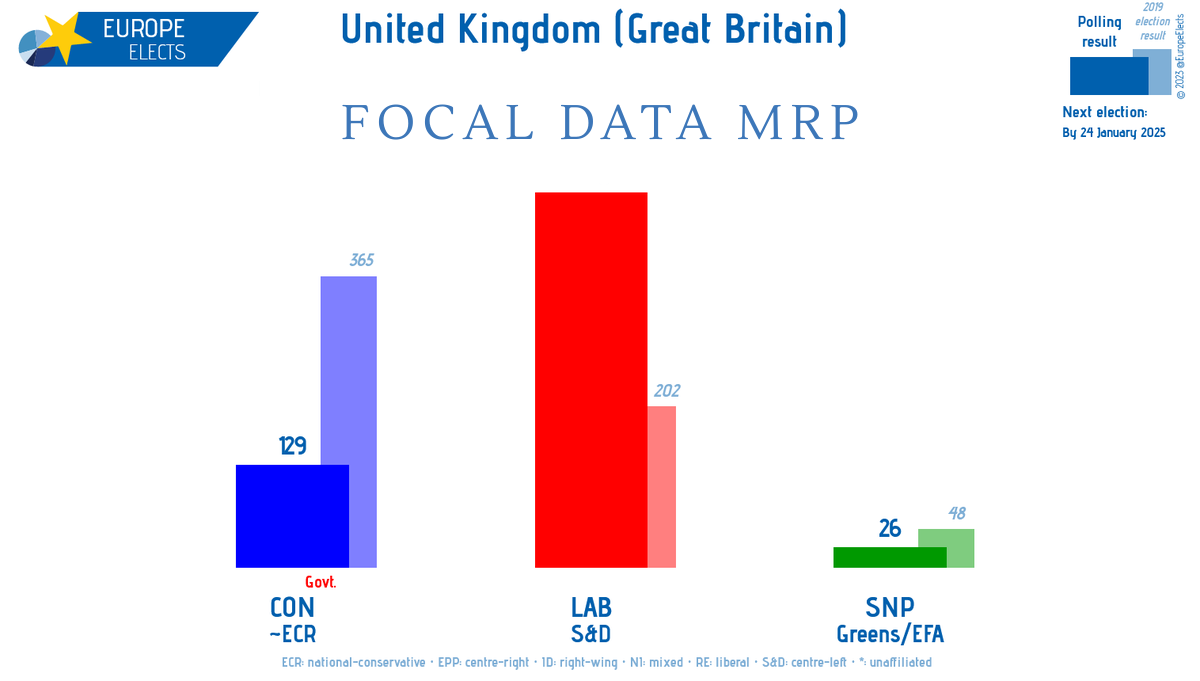
In the world of opinion polling and election forecasting, a term has gained a lot of attention in recent years — Focal Data MRP. If you’ve ever wondered what this means, why it’s important, or how it helps explain election outcomes better than traditional polls, you’re in the right place. This article breaks down everything you need to know, using real information from reports, methodological notes, and expert descriptions of this advanced statistical approach.
What “Focal Data MRP” Means
At its core, Focal Data MRP refers to the use of Multilevel Regression with Post‑Stratification (MRP) by the research organisation Focaldata. This is a statistical polling method that takes large survey samples and transforms them into detailed local estimates of public opinion. Essentially, it predicts how people in specific regions or demographic groups might vote.
Traditional polls usually report broad numbers for an entire country, such as “Party A has 42% support.” MRP goes much further. It builds a model predicting how different types of people — based on age, education, region, and other factors — think. Then it combines these predictions with real population data to estimate local voting intention. This allows for a far more accurate and granular picture of public opinion.
Focaldata is one of the organisations using this technique to produce forecasts and projections for events like the United Kingdom general elections. This combination — Focaldata + MRP — is what many analysts refer to simply as Focal Data MRP.
Why MRP Is Different From Traditional Polling
Most traditional polls draw a small sample of respondents, sometimes just 1,000 to 2,000 people, and then weight it to represent the broader population. While these polls give a national snapshot of voting intention, they often struggle to provide accurate estimates for local areas or individual seats. This is especially true in countries with first‑past‑the‑post systems like the UK.
MRP works in two key steps. The first is multilevel regression, which builds a statistical model explaining how voting intention varies with characteristics like age, gender, education, past vote, and region. The second step is post‑stratification, where the model’s results are weighted according to real census-style data to reflect the actual population. By combining these two steps, MRP produces results that are much more granular and locally relevant, such as how voters in a specific constituency are likely to vote.
| Attribute | Details |
|---|---|
| Name | Focal Data MRP |
| Company / Source | Focaldata |
| Type | Statistical Polling / Modeling Method |
| Full Form | Multilevel Regression with Post-Stratification (MRP) |
| Purpose | Estimate public opinion and election outcomes at local and national levels |
| Sample Size | Tens of thousands of respondents (varies by study) |
| Key Features | Granular local predictions, demographic weighting, probability modeling |
| Applications | Elections, social surveys, market research |
| Reliability | High (based on large samples and statistical modeling) |
| Limitations | Complex modeling, sensitive to assumptions, small parties harder to predict |
| Official Website | focaldata.com |
How Focaldata Uses MRP in Practice
Every Focaldata MRP projection begins with a large survey sample, often tens of thousands of respondents. This large dataset ensures the model has enough data to make accurate predictions at a local level. For example, one significant Focaldata MRP run in the UK surveyed 24,536 British adults, in collaboration with partners like Prolific, during a defined fieldwork period.
In constructing their model, Focaldata uses a combination of census data, demographic breakdowns, hierarchical statistical techniques, turnout models, and adjustments to correct for known biases. This rigorous approach allows the creation of a seat-by-seat probability projection, which can then be aggregated for national outcomes. Essentially, it translates broad survey responses into detailed insights about voter behaviour across regions.
Benefits of the Focal Data MRP Approach
One of the most significant advantages of MRP is its ability to provide greater local detail. Unlike traditional polls that only provide broad national numbers, MRP can generate estimates for small areas, including individual constituencies. This is particularly important in electoral systems where seat results depend heavily on local vote distribution.
Another benefit is demographic and behavioural precision. By modelling how characteristics such as age, education, or past voting history affect voting intention, MRP allows researchers to gain nuanced insight into voter behaviour. For example, a Focaldata model might reveal how middle-aged voters could act as key swing groups in a given election cycle.
Large datasets enhance accuracy, making MRP a more data-driven and reliable approach compared to small, unweighted polls. The extensive sample sizes reduce uncertainty and allow for more precise estimates, especially for important local constituencies
Limitations and Challenges in MRP
Despite its advantages, MRP is not without challenges. The method is technically and computationally complex, requiring advanced statistical knowledge, computational resources, and careful model design. Building and validating such models is no small task.
MRP models are also sensitive to assumptions. Small changes in how demographic factors relate to behaviour can significantly affect outcomes, meaning that results must be interpreted with care.
Finally, MRP can struggle with smaller parties and highly unique local voting patterns. Even Focaldata warns that projections for minor parties at the constituency level should be interpreted cautiously. These limitations highlight that while MRP is powerful, it is still a model and not an exact predictor of real-world outcomes.

Real Outcomes From Focal Data MRP
The impact of MRP can be observed in how Focaldata has published projections for the UK general election cycle. For instance, one projection estimated a Labour majority well above 200 seats, alongside detailed breakdowns of how different parties might perform across the country. Demographic breakdowns revealed that voters under 50 leaned strongly toward one party, illustrating how combining data with statistical modelling gives more precise insights than simple national polls.
These projections also showed how turnout predictions and demographic weighting could influence overall seat allocation. By understanding these local differences, analysts, media, and voters gain a deeper insight into electoral trends beyond national percentages.
Why People Care About MRP and Focaldata
MRP has quickly gained attention because it answers the question: “What does a national survey really mean locally?” By incorporating actual population structures rather than just random samples, MRP provides predictions grounded in demographic reality.
Organisations like Focaldata have made their methodologies transparent, allowing analysts and the public to understand how these models work. This transparency helps build trust in probabilistic seat counts and constituency forecasts, which feel more realistic than a simple national percentage estimate.
Looking Ahead: The Future of MRP in Polling
As statistical techniques and computing power improve, MRP and similar methods are likely to become increasingly common. Researchers are exploring enhancements such as spatial modelling, more accurate post-stratification, and the inclusion of additional auxiliary data to increase model reliability.
For Focaldata, each new election cycle brings refinements in sample strategy, turnout modelling, and adjustment techniques. The focus is always on reducing error and increasing realism, ensuring that their projections remain robust and actionable for analysts and the public alike.
In Summary
Focal Data MRP is more than a buzzword. It represents a powerful, statistically rigorous method for drawing insights from large survey datasets to answer local and national opinion questions. By combining regression modelling with detailed population data, MRP goes beyond traditional polling to provide highly detailed forecasts.
Whether you are a political analyst, researcher, or simply curious about modern opinion research, MRP demonstrates a fascinating blend of data science, demography, and statistical inference. Focaldata remains one of the organisations at the forefront of applying this technique to real-world elections, making its projections some of the most detailed and trustworthy available today.
FAQs
Q: What is Focal Data MRP?
A: Focal Data MRP is a statistical method used by Focaldata to estimate public opinion and election results using multilevel regression and post-stratification.
Q: How does Focal Data MRP differ from normal polling?
A: Focal Data MRP uses demographic data and population weights to create detailed local predictions, unlike standard national polls.
Q: Why is Focal Data MRP considered reliable?
A: Focal Data MRP relies on large survey samples, statistical modeling, and real-world population data to produce accurate, granular insights.
Q: Can Focal Data MRP predict individual votes?
A: No, Focal Data MRP predicts trends and probabilities for groups or regions, not the choices of individual voters.
Q: Where else is Focal Data MRP applied?
A: Beyond elections, Focal Data MRP can be used in market research, social surveys, and opinion studies where demographic insights are important.
