

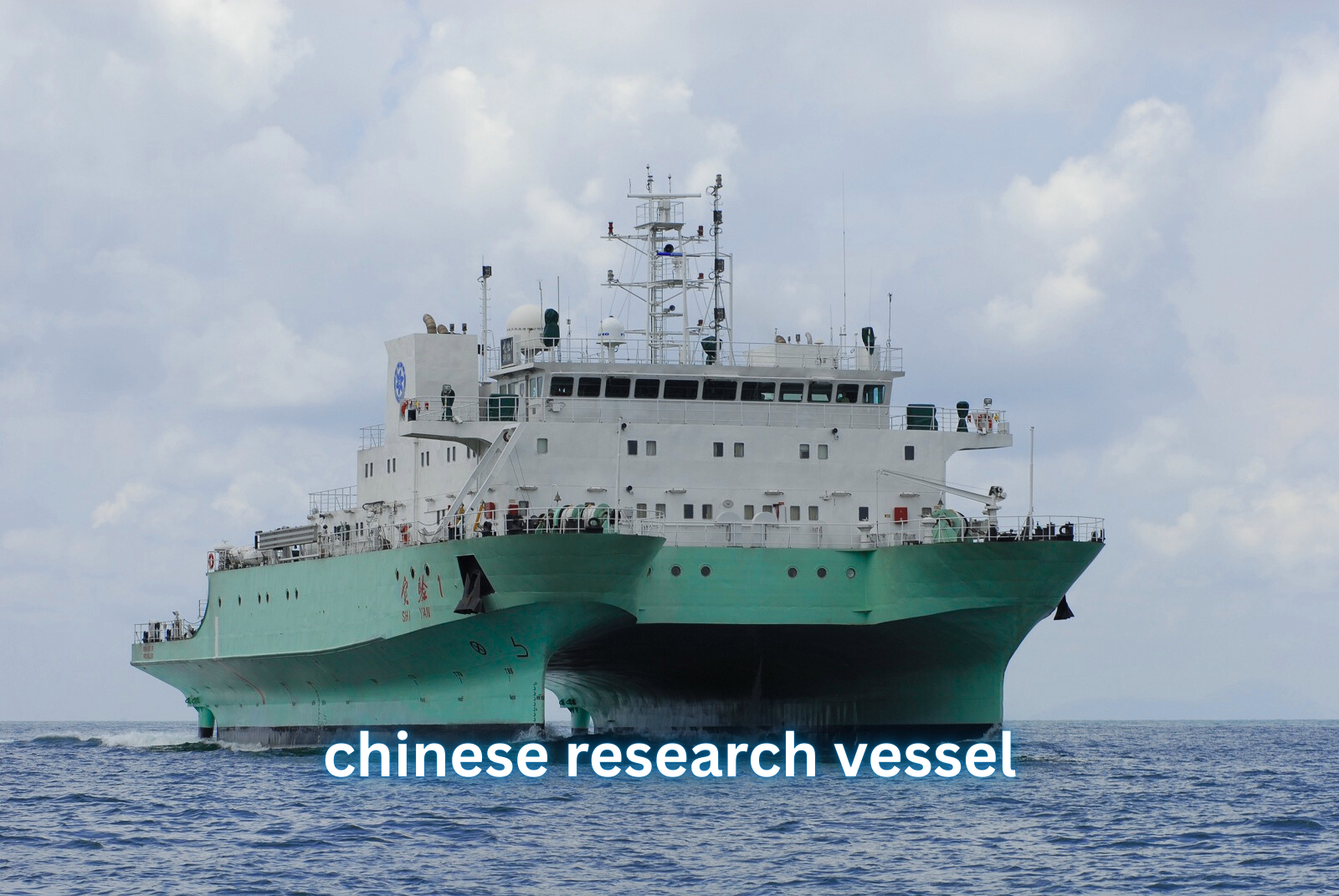
China’s chinese research vessel fleet is a growing and increasingly important part of global ocean exploration. These ships — funded by government scientific bodies, universities, and sometimes local communities — travel across the world’s seas to study the ocean environment, map the seafloor, collect deep-sea samples, and test marine technologies. They blend scientific ambition with national interests, helping China expand knowledge about the planet’s seas while also strengthening its presence far from its coastal waters.
From early oceanographic survey ships to ultra-modern intelligent vessels and deep-sea submersible carriers, China’s chinese research vessel program now supports studies on climate change, marine biodiversity, and geological processes beneath the waves. However, this growth also intersects with geopolitics, as foreign governments closely monitor these vessels’ activities. (Chinese Academy of Sciences)
What Are Chinese Research Vessels?
At their core, chinese research vessels are ships designed specifically for scientific exploration of the oceans. Unlike fishing boats or military warships, these vessels carry advanced instruments such as sonar systems, ocean drilling equipment, submersibles, laboratories, and robotics. They are floating science centers capable of collecting data on water chemistry, marine life, geology, and deep-sea environments.
China’s chinese research vessel operations are run by institutions like the Chinese Academy of Sciences, universities (including Tongji University), and government bodies such as the State Oceanic Administration. Over the decades, China transitioned from borrowing foreign research ships to constructing its own globally capable fleet. (Wikipedia)
Historical Roots and Fleet Growth
China began developing oceanographic capabilities in the 20th century. Early vessels, often modest survey ships, measured water depth, temperature, and basic physical features of the sea. The well-known Xiang Yang Hong series, including Xiang Yang Hong 09 built in the 1970s, established China’s distant-water chinese research vessel presence. (Wikipedia)
Over time, more sophisticated ships followed. The Type 645 oceanographic research ships introduced onboard laboratories, enhancing the fleet’s capacity for scientific missions. (Wikipedia) By the early 2000s, China expanded its fleet with dual-use experimental ships like Beidiao 993, a chinese research vessel capable of testing acoustic equipment while performing scientific work. (Wikipedia)
| Attribute | Details |
|---|---|
| Name | Chinese Research Vessel |
| Type | Scientific / Oceanographic Ship |
| Purpose | Ocean exploration, marine science, deep-sea research, climate study |
| Operator | Chinese Academy of Sciences, Universities (e.g., Tongji), State Oceanic Administration |
| Key Vessels | Tansuo-1, Tongji, Tan Suo San Hao, Xue Long 2, Beidiao 993 |
| Capabilities | Deep-sea exploration, submersible deployment, icebreaking, autonomous vehicle support |
| Launch Era | 1970s – present |
| Range | 10,000 – 15,000+ nautical miles depending on vessel |
| Crew & Scientists | Typically 30–100+ depending on vessel size |
| Notable Achievements | Deep-sea missions, polar research, international scientific collaboration |
Modern Chinese Research Vessels
Tansuo‑1: Deep-Sea Investigator
Among China’s most advanced vessels is Tansuo‑1, a chinese research vessel associated with the Institute of Deep-Sea Science and Engineering. In 2022–2023, Tansuo‑1 completed a 157-day deep-sea research mission around Oceania, covering over 22,000 nautical miles and dozens of dives with the submersible Fendouzhe. The mission gathered sediment samples, marine organisms, and collaborated with international scientific teams. (Chinese Academy of Sciences)
This voyage represented China’s first large-scale international scientific deep-diving mission, showcasing capabilities previously accessible to only a few nations. The Tansuo-1 is now considered a flagship chinese research vessel.
Tongji: The Intelligent Research Vessel
In 2025, China unveiled Tongji, the nation’s first intelligent deep-sea chinese research vessel. Featuring a diesel-electric propulsion system and intelligent ship classification, Tongji is capable of long expeditions in the East and South China Seas.
Operated by Tongji University, this chinese research vessel serves as a floating campus for training students and researchers while conducting scientific missions. It represents a new model where research vessels combine education and exploration. (Maritime Executive)
Ice-Capable Vessels: Ji Di and Tan Suo San Hao
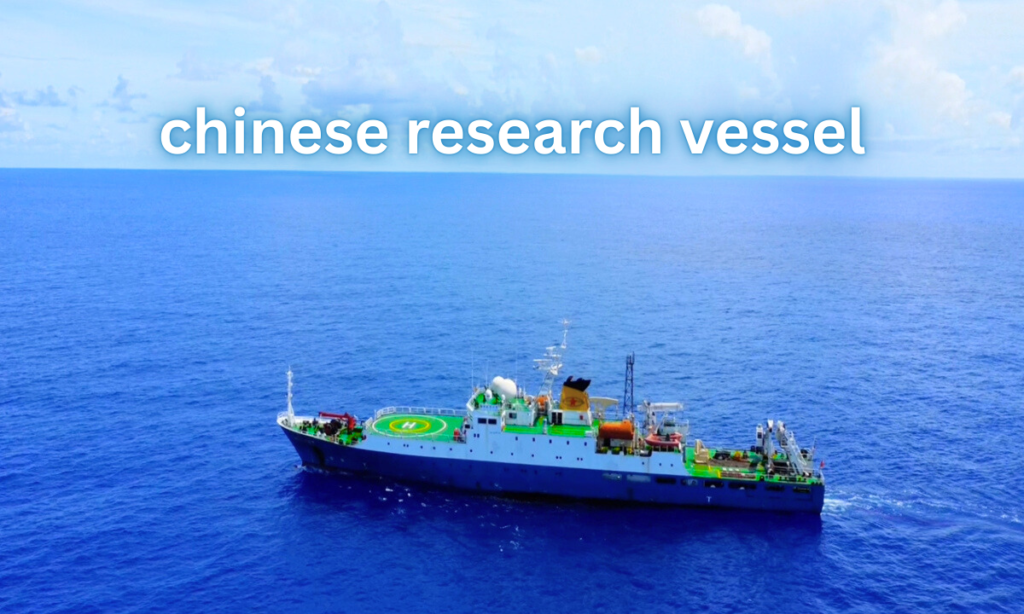
To enhance polar and global deep-sea operations, China built ice-capable chinese research vessels like Ji Di and Tan Suo San Hao, completed in 2024. These ships are designed to endure extreme conditions and remain at sea for extended missions, supporting research in Arctic and Antarctic waters.
Tan Suo San Hao, independently constructed in China, spans 104 meters, displaces 10,000 tons, and has a range of 15,000 nautical miles, capable of deploying deep-sea submersibles and autonomous underwater vehicles. (Wikipedia)
Mission and Function
Chinese research vessels carry out diverse missions:
- Oceanography and climate science: Measuring currents, temperatures, chemistry, and marine biodiversity to study climate patterns.
- Geological and tectonic exploration: Mapping the seafloor, studying plate boundaries, and performing ocean drilling. (China Daily)
- Deep-sea biodiversity surveys: Submersibles onboard chinese research vessels retrieve organisms from extreme ocean depths. (Chinese Academy of Sciences)
- Technology testing: Research vessels trial new robotics, drilling tools, and underwater vehicles.
- Education and collaboration: Platforms like Tongji support training and international scientific cooperation. (Maritime Executive)
Scientific and Strategic Benefits
China’s chinese research vessels offer critical scientific value:
- Expanded Ocean Knowledge: Collect seafloor and oceanographic data to support global science.
- Climate Insights: Feed observations into climate and carbon cycle models.
- Engineering and Innovation: Enhance capabilities in autonomous systems and vessel design.
- Human Capital: Train the next generation of oceanographers and engineers.
At the same time, the presence of these chinese research vessels in sensitive maritime areas underscores strategic considerations. Australia, India, and other countries have monitored operations due to the dual-use potential of research data, blending science and geopolitics. (The Guardian)
Challenges and Future Trends
Challenges faced by chinese research vessels include:
- Diplomatic Perception: Scientific missions can be interpreted strategically.
- Technological Complexity: Deploying submersibles and autonomous systems safely is demanding.
- Environmental Protection: Deep-sea exploration requires careful ecological management.
China plans to continue expanding its fleet of chinese research vessels, building more advanced ships, supporting international cooperation, and pushing the boundaries of marine science.
Conclusion
The fleet of chinese research vessels reflects China’s blend of scientific ambition and maritime capability. From early survey ships to modern deep-sea exploration platforms, these vessels are scientific laboratories at sea, training platforms for future experts, and instruments of international maritime presence. As oceans increasingly shape global science, climate, and geopolitics, China’s chinese research vessels will remain key players in unlocking the mysteries of the deep.
FAQs
Q: What is a Chinese research vessel?
A: A Chinese research vessel is a ship built and operated by China for scientific exploration, including studying oceans, marine life, geology, and climate.
Q: What are the main types of Chinese research vessels?
A: They include deep-sea exploration ships, intelligent research vessels, polar icebreakers, and unmanned support ships.
Q: Who operates Chinese research vessels?
A: They are operated by institutions like the Chinese Academy of Sciences, universities such as Tongji, and government maritime agencies.
Q: What are the benefits of Chinese research vessels?
A: They advance ocean science, train marine researchers, test new technologies, and contribute to climate and ecological studies.
Q: Are Chinese research vessels used for military purposes?
A: Officially, they are for science, but some missions attract scrutiny due to potential dual-use data for navigation or strategic purposes.
