

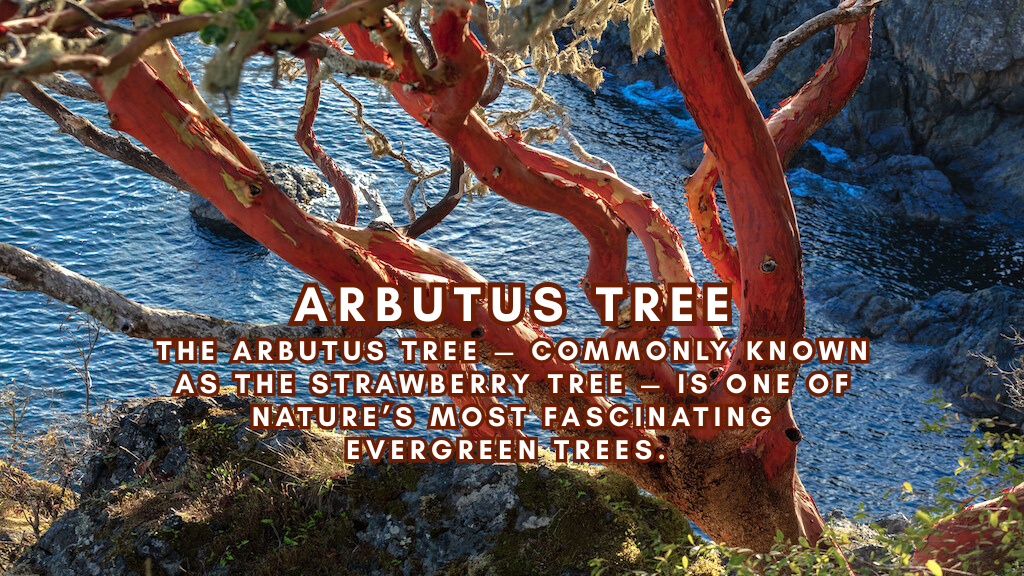
The Arbutus tree — commonly known as the Strawberry Tree — is one of nature’s most fascinating evergreen trees. It has captured the admiration of gardeners, historians, and nature lovers for centuries. With its peeling bark, year‑round foliage, bell‑shaped flowers, and unusual fruit that ripens at the same time as new blossoms appear, this tree feels like a magical gift from the natural world. In this article, you’ll discover what an Arbutus tree is, how it grows, why it matters ecologically and culturally, and the surprising ways it has been used by people throughout history.
What Is the Arbutus Tree?
The Arbutus tree refers to a group of evergreen trees and shrubs in the Ericaceae family. The most well‑known member is Arbutus unedo, commonly called the Strawberry Tree. Despite its name, it isn’t related to the common garden strawberry — the fruit only resembles a strawberry in appearance, not in botanical relation.
This tree is evergreen, meaning it retains its glossy, leathery leaves throughout the year. It is native to the Mediterranean region and western Europe, where it grows on hillsides, in woodlands, and amid rocky scrubland. It has also been cultivated successfully in parts of North America, especially in California and the Pacific Northwest, where its drought tolerance and ornamental beauty are admired.
Appearance and Physical Traits
The Arbutus tree stands out visually. Mature trees can range from small shrubs to medium‑sized trees, often reaching 10–15 meters (30–50 feet) tall in ideal conditions. Some specimens may remain smaller, especially when grown in gardens or urban areas.
The bark is one of the tree’s most striking features. It peels away naturally in thin flakes, revealing fresh, smooth bark in shades of reddish‑brown or orange. This gives the tree an ornamental, sculptural quality that makes it a favorite in landscapes.
The leaves are dark green and glossy, typically 5–10 cm long, with tiny serrated edges. These evergreen leaves create a dense canopy that provides shelter for birds and other wildlife.
| Feature | Details |
|---|---|
| Common Name | Strawberry Tree |
| Scientific Name | Arbutus unedo |
| Family | Ericaceae |
| Type | Evergreen tree/shrub |
| Height | 10–15 meters (30–50 ft) |
| Leaves | Glossy, dark green, evergreen |
| Flowers | White or pink, bell-shaped, autumn–winter |
| Fruits | Red/orange berries, edible |
| Origin | Mediterranean, Western Europe |
| Lifespan | 50–100 years (approx.) |
| Soil | Well-drained, tolerant to poor soils |
| Sunlight | Full sun to partial shade |
| Uses | Ornamental, jams, jellies, liqueurs, traditional medicine |
| Wildlife Value | Nectar for bees, berries for birds |
Flowers and Fruit — Beauty and Surprise
One of the most remarkable aspects of the Arbutus tree is its flowering and fruiting cycle. Unlike many trees, Arbutus unedo can display flowers and ripe fruit at the same time.
In autumn and winter, the tree produces small, bell‑shaped flowers in shades of white or pale pink. These fragrant blossoms hang in clusters and are beloved by bees, which depend on them for nectar during cooler months when few other plants are flowering.
About 9–12 months later, the fruit ripens. These are round, strawberry‑like berries approximately 1–2 cm in diameter. They start green, turn yellow, then become bright red or orange when fully ripe. While the flavor is often described as mild, slightly sweet, and somewhat gritty rather than juicy, the appearance is charming and unique.
The simultaneous display of flowers and fruit makes Arbutus unedo especially decorative in gardens — even in seasons when many other trees are bare.
Cultural History and Symbolism
But the Arbutus tree is more than just a pretty plant — it has deep cultural roots. In ancient times, it was known and described by classical scholars such as Theophrastus and Pliny, who noted its unique fruits and evergreen habit. Its presence around the Mediterranean made it a familiar feature of early gardens and wild landscapes.
In Spain, the strawberry tree holds special symbolic value. In the center of Madrid, a statue and emblem depict a bear eating fruit from an Arbutus tree (“El Oso y el Madroño”). This iconic image appears on city crests, taxi cabs, and infrastructure throughout the capital.
In other parts of Europe, the tree has been associated with folklore and tradition, often appearing in local tales and historical references. Early gardeners also valued it for its ornamental qualities — one 17th‑century garden inventory described a “very fair tree” in a kitchen garden for its beauty.
Growing Conditions and Cultivation
The Arbutus tree thrives in conditions that mimic its Mediterranean origins: warm, dry summers and mild, wet winters. It prefers well‑drained soil and sunshine but can tolerate partial shade where conditions are cooler.
A key to its success is that it is drought‑tolerant once established. Its taproot grows deep, helping the tree withstand dry spells without frequent watering. This makes it a popular choice for low‑maintenance gardens and landscapes in areas with limited rainfall.
While it can tolerate frost and colder temperatures, young trees may benefit from some protection against severe winter winds or heavy frost during their first few years. Once mature, the Arbutus becomes quite hardy.

Ecological and Wildlife Benefits
The Strawberry Tree plays an important role in ecosystems, especially in regions where flowering plants are scarce in cooler months. Its nectar and pollen feed bees and other pollinators during autumn and winter — crucial support when other sources are scarce.
The tree’s berries provide food for birds and small mammals, while its dense evergreen foliage offers shelter and nesting habitat. In some areas, wildlife such as thrushes and blackbirds feed heavily on the fruit once it ripens.
Because of these attributes, the Arbutus tree can be a valuable addition to wildlife‑friendly gardens and restoration projects. Its ability to grow in poor or degraded soils also makes it useful for ecosystem restoration and preventing soil erosion on slopes.
Uses of Fruit and Other Tree Parts
Although the Arbutus fruit isn’t typically eaten fresh by many people due to its mild flavor, it has rich culinary uses, especially when processed. The berries have a high sugar and antioxidant content and can be made into jams, jellies, marmalades, and fermented beverages.
In Portugal, the fermented fruit is distilled into a strong spirit known as medronho, while in other Mediterranean regions similar liqueurs and wines are made.
Beyond food and drink, various parts of the tree have been used in traditional herbal medicine. The leaves, bark, and roots are known in folk practice for astringent, diuretic, and antiseptic properties, and have been employed to support urinary health and to treat mild infections.
The wood itself, though not widely used commercially, has been carved into small objects and instruments in some cultures. Its dense grain also makes it suitable for charcoal production.
Modern Importance and Uses
Today, the Arbutus tree is appreciated not only for its ornamental beauty but also for its functional roles in sustainable landscapes and urban green spaces. Its drought tolerance makes it ideal for water‑wise gardens, while its evergreen nature and seasonal interest provide visual appeal year‑round.
Urban planners and gardeners often use the tree for hedges, windbreaks, and screens, where its dense foliage can help buffer wind and create shelter. It also supports pollinator populations, adding ecological value to garden spaces.
Conclusion
The Arbutus tree, and especially Arbutus unedo, is much more than an attractive plant. It is a cultural icon, ecological supporter, and resilient botanical species that has served humans and wildlife for generations. From its classical history in ancient gardens to its modern role in sustainable landscaping, the Strawberry Tree continues to enchant and benefit people around the world.
If you are considering adding an Arbutus tree to your garden, you’re choosing not just a plant — you’re embracing a living piece of botanical heritage that offers beauty, wildlife value, and a touch of Mediterranean charm wherever it grows.
FAQs
Q: What is an Arbutus tree?
A: The Arbutus tree, also called the Strawberry Tree, is an evergreen tree known for its peeling red-brown bark, glossy leaves, white or pink flowers, and small red fruits.
Q: Where does the Arbutus tree grow best?
A: It grows best in Mediterranean-like climates with well-drained soil, full sun, and mild winters, but it can tolerate some drought and partial shade.
Q: Are Arbutus tree fruits edible?
A: Yes, the berries are edible. They have a mild, sweet flavor and are often used for jams, jellies, or fermented beverages.
Q: How tall does an Arbutus tree grow?
A: Mature Arbutus trees typically grow between 10–15 meters (30–50 feet), though some may remain smaller as shrubs.
Q: Does the Arbutus tree attract wildlife?
A: Yes, its flowers provide nectar for bees, and its berries feed birds and small mammals, making it excellent for wildlife gardens.
