

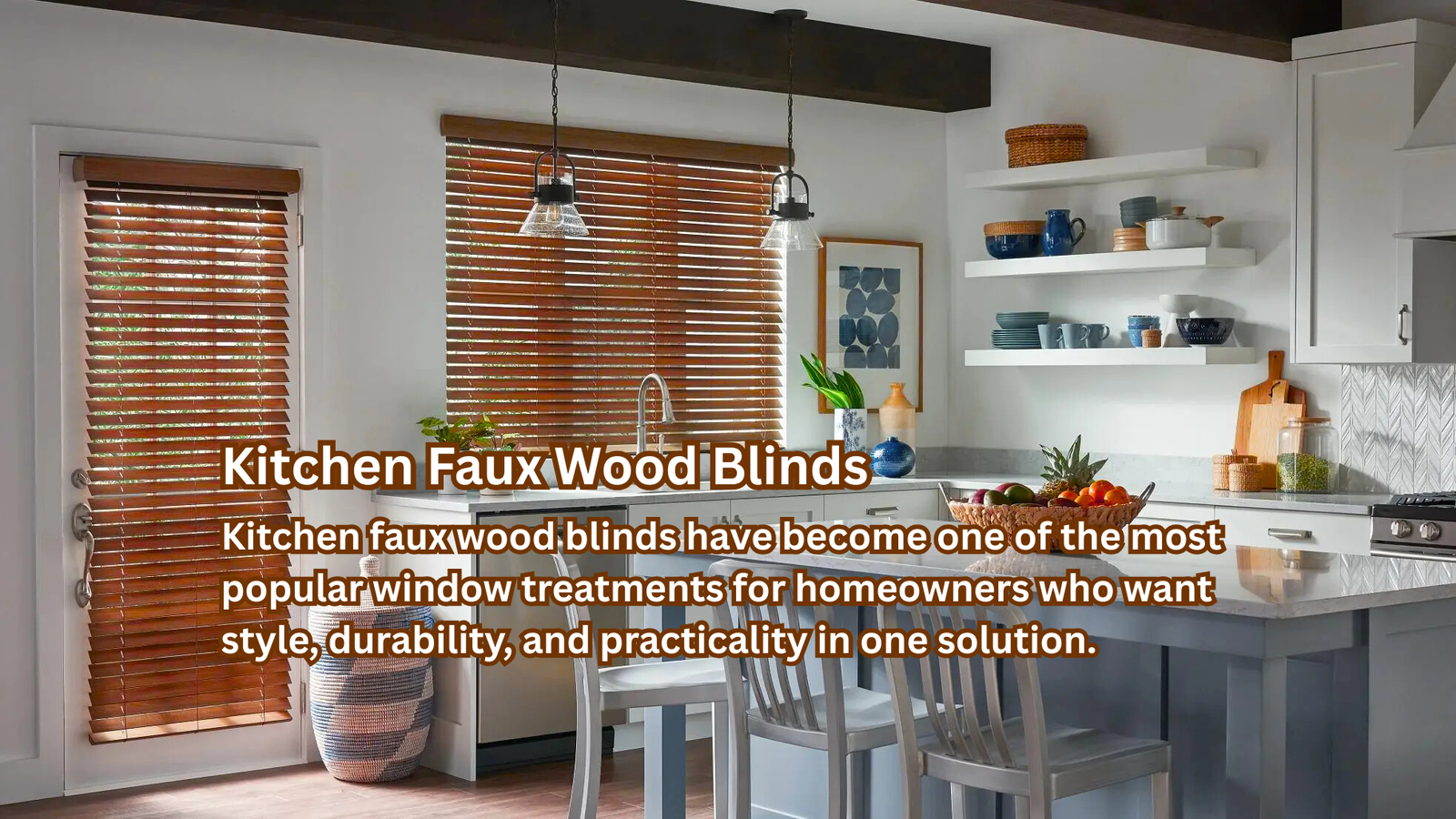
Kitchen faux wood blinds have become one of the most popular window treatments for homeowners who want style, durability, and practicality in one solution. Kitchens are high-activity spaces. Heat, steam, moisture, grease, and sunlight all play a role in how materials perform over time. Because of this, choosing the right blinds is not just about looks—it is about long-term performance and comfort.
This article explores kitchen faux wood blinds in detail. From materials and design to durability, maintenance, lifestyle suitability, and commonly searched “profile-style” details, everything is explained clearly and honestly for real readers.
What Are Kitchen Faux Wood Blinds
Kitchen faux wood blinds are window blinds designed to look like real wood but made from engineered materials such as PVC, vinyl, or composite blends. These materials are specially developed to resist moisture, humidity, and temperature changes—conditions commonly found in kitchens.
Unlike natural wood blinds, faux wood blinds do not absorb water or warp when exposed to steam from cooking. This makes them an ideal choice for kitchen windows, especially those near sinks, stoves, or dishwashers.
Their appearance closely resembles painted or stained wood, offering the warmth of wood without its weaknesses in humid environments.
Why Faux Wood Works Better in Kitchens
The kitchen is not a forgiving space for natural materials. Steam rises from boiling pots. Oil particles float in the air. Sunlight heats surfaces unevenly. Faux wood blinds are engineered to handle these challenges.
Because they are non-porous, faux wood slats do not swell or crack. They remain stable in changing temperatures and are less likely to discolor over time. This reliability is one of the biggest reasons interior designers frequently recommend faux wood over real wood for kitchens.
Another advantage is ease of cleaning. A simple wipe with a damp cloth removes grease or dust, which is not possible with untreated natural wood.
Material Composition and Build Quality
Faux wood blinds are typically made from:
PVC-based materials that are completely moisture resistant
Composite blends that add rigidity and strength
Protective coatings that prevent fading and staining
High-quality faux wood blinds feel solid and balanced. The slats are thicker than aluminum blinds and heavier than real wood in some cases. This weight contributes to better light control and a more premium feel when adjusting the blinds.
| Attribute | Details |
|---|---|
| Product Name | Kitchen Faux Wood Blinds |
| Type | Window Blinds (Faux Wood / PVC / Composite) |
| Purpose | Light control, privacy, kitchen décor |
| Durability | High – moisture, heat, and warp resistant |
| Maintenance | Easy – wipe with cloth, dust regularly |
| Customization | Available in various sizes, colors, slat widths |
| Ideal For | Kitchens, bathrooms, humid areas |
| Appearance | Wood-like texture, painted or grain finishes |
| Lifespan | 7–15 years depending on quality |
| Safety | Cordless or motorized options available |
| Eco-Friendly | Some models use recyclable or low-emission materials |
| Price Range | Affordable, varies by size and finish |
| Social Media | Not applicable (product-based) |
| Family / Siblings | Related to real wood blinds, aluminum blinds, shutters |
Design and Visual Appeal
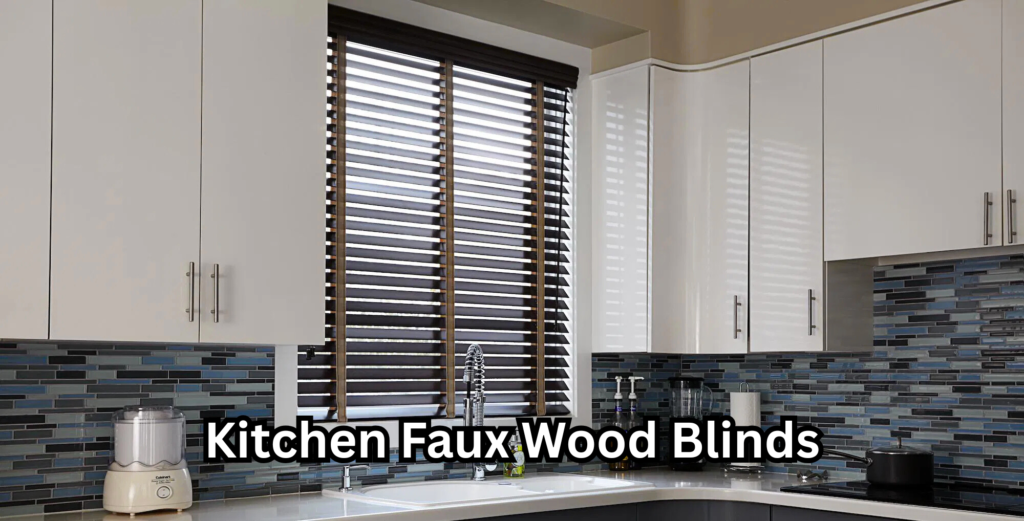
One of the strongest selling points of kitchen faux wood blinds is how closely they resemble real wood. Advances in manufacturing allow for realistic wood grain textures, smooth painted finishes, and a wide range of colors.
Popular kitchen choices include:
Clean white or off-white finishes
Soft greys for modern kitchens
Light oak or maple tones for warm interiors
Wide slats, often 50 mm, are especially popular in kitchens because they allow more light in when open and provide a clean, uncluttered look when closed.
Light Control and Privacy
Kitchen faux wood blinds offer excellent control over natural light. By adjusting the tilt of the slats, homeowners can let sunlight in while maintaining privacy from neighbors or passersby.
This is especially useful for kitchens facing streets or shared spaces. You can enjoy daylight during cooking or dining while still keeping the interior private.
When fully closed, faux wood blinds also help reduce glare, which is useful for kitchens with glossy countertops or reflective surfaces.
Durability and Longevity
Durability is where faux wood blinds truly stand out. In a kitchen environment, real wood blinds may begin to show damage within a few years. Faux wood blinds, when properly installed, can last much longer.
They resist:
Warping from moisture
Cracking from heat
Peeling paint or finishes
Mold and mildew growth
For households that cook frequently, this durability translates into long-term value and fewer replacements.
Cleaning and Maintenance
Maintenance is simple and practical. Faux wood blinds do not require special treatments or oils. Routine care includes:
Dusting with a microfiber cloth
Wiping with mild soap and water for grease
Occasional deep cleaning with non-abrasive cleaners
Because the surface is sealed, stains do not soak in. This makes faux wood blinds one of the easiest window treatments to maintain in a busy kitchen.
Energy Efficiency and Comfort
Kitchen faux wood blinds also contribute to indoor comfort. When closed, they help reduce heat from direct sunlight during warmer months. In cooler seasons, they add a layer of insulation to the window.
This can help regulate kitchen temperatures, making the space more comfortable during cooking and reducing reliance on heating or cooling systems.
Safety and Modern Control Options
Many faux wood blinds are available in cordless or motorized options. Cordless designs are safer for homes with children or pets and offer a cleaner appearance.
Motorized faux wood blinds can be controlled via remote or smart home systems, adding convenience for hard-to-reach kitchen windows.
Cost and Value for Money
Compared to real wood blinds, faux wood blinds are more affordable while offering similar visual appeal. Prices vary based on size, slat width, finish, and control options, but overall they provide strong value for long-term use.
Because they last longer in kitchen environments, the cost per year of use is often lower than real wood alternatives.
Lifestyle Suitability
Kitchen faux wood blinds suit a wide range of lifestyles:
Busy households that cook daily
Families with children
Rental properties needing durable fittings
Modern homes with open-plan kitchens
They balance practicality with aesthetics, making them suitable for both everyday use and design-focused interiors.
Product Profile Details (Clarified & Professional)
To address commonly searched profile-style details, here is a clear and honest breakdown:
Age:
Not applicable. Kitchen faux wood blinds are a manufactured product, not a person. Product lifespan typically ranges from 7 to 15 years depending on quality and use.
Height:
Customizable. Faux wood blinds are made to fit window heights and widths, usually measured in centimeters or inches.
Family:
Not applicable. However, faux wood blinds belong to the wider family of window treatments, including real wood blinds, aluminum blinds, and fabric shades.
Siblings:
Comparable products include real wood blinds, aluminum Venetian blinds, and composite shutters.
Net Worth:
Not applicable. Pricing varies by brand, size, and features rather than personal value.
Physical Appearance:
Solid horizontal slats with wood-like texture, available in painted or wood-grain finishes, typically 35 mm or 50 mm wide.
Lifestyle:
Designed for functional, practical living environments—especially kitchens and bathrooms.
Social Media:
Not applicable. However, many interior design brands and home décor companies showcase faux wood blinds on platforms like Instagram and Pinterest.
Environmental Considerations
Many modern faux wood blinds are produced using recyclable materials and eco-friendly manufacturing processes. Because they last longer in humid spaces, they also reduce waste from frequent replacements.
Some manufacturers offer certifications for low emissions and sustainable production, making faux wood blinds a responsible choice for environmentally conscious homeowners.
Installation Considerations
Installation can be done inside or outside the window recess. Inside mounts offer a clean, built-in look, while outside mounts can make small kitchen windows appear larger.
Professional installation ensures correct alignment and smooth operation, especially for wider or motorized blinds.
Final Thoughts
Kitchen faux wood blinds offer a smart balance of beauty, strength, and everyday practicality. They bring the warmth of wood into the kitchen without the maintenance challenges that natural materials face in humid, high-activity spaces.
For homeowners seeking a long-lasting, easy-to-maintain, and visually pleasing window solution, faux wood blinds remain one of the most reliable choices available today.
FAQs
Q: Are kitchen faux wood blinds moisture-resistant?
A: Yes, kitchen faux wood blinds are made from durable materials like PVC that resist moisture, making them ideal for humid kitchen environments.
Q: How do I clean kitchen faux wood blinds effectively?
A: Wipe kitchen faux wood blinds with a damp cloth or mild soap. Regular dusting helps maintain their fresh look.
Q: Can kitchen faux wood blinds withstand heat from cooking?
A: Absolutely. Kitchen faux wood blinds are designed to resist heat and won’t warp or crack near stoves or ovens.
Q: Are kitchen faux wood blinds suitable for small or narrow windows?
A: Yes, kitchen faux wood blinds can be custom-sized to fit any window, providing style and privacy even in compact spaces.
Q: Will kitchen faux wood blinds fade in sunlight?
A: High-quality kitchen faux wood blinds come with protective coatings to prevent fading, keeping them vibrant for years.
